Hiking the Vikos Gorge: A Complete Trail Guide
The Vikos Gorge cuts through the mountains of Epirus with a quiet confidence. It holds a Guinness World Record as the world’s deepest gorge relative to its width — yet most visitors have never heard of it. That’s part of what makes it worth your time.
This guide covers everything you need to plan a Vikos Gorge hike: the best trails, how to get there, what to pack, and when to go. Whether you have one full day or want to take it slow over a weekend, the gorge rewards the effort.
What Is the Vikos Gorge?
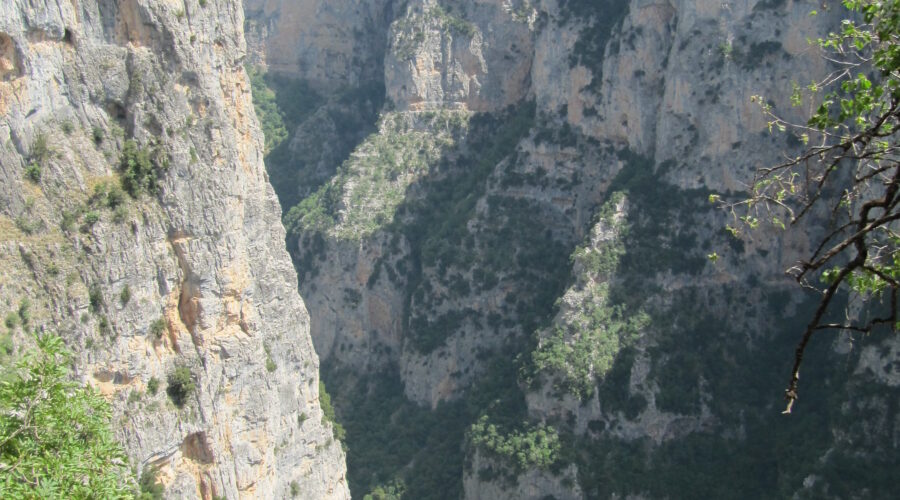
The gorge runs through the Vikos–Aoös National Park in the Zagori region of northwestern Greece. At its deepest point, the walls drop over 900 metres from rim to river. The Voidomatis river runs along the gorge floor — one of the cleanest rivers in Europe — fed entirely by springs and snowmelt from the Tymfi massif above.
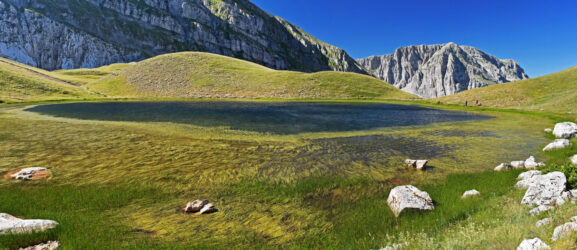
The surrounding area, known as Zagori, is a collection of 46 stone villages connected by old Ottoman-era paths and arched bridges. The hiking trails follow these ancient mule tracks through forests of oak, beech, and plane trees.
The Main Trail: Monodendri to Vikos Village
The classic Vikos Gorge trail runs from Monodendri down into the gorge and out to the village of Vikos (or in reverse, Mikro Papigo to Monodendri). The full traverse is approximately 12–14 km and takes 5–7 hours depending on your pace and the number of stops.
Difficulty: Moderate. There are some steep descents on loose rock and sections requiring hands. No technical climbing is needed, but good footwear is essential. Trekking poles help significantly on the descent into the gorge.
Elevation change: Roughly 600–700 metres of descent from Monodendri to the gorge floor, followed by a gradual ascent toward Vikos village.
The trail is waymarked with red and yellow blazes (O3 national trail). Signage is reasonable, but a paper map or downloaded offline map (Maps.me or Komoot work well) is a good backup — mobile signal is unreliable inside the gorge.
When to Go
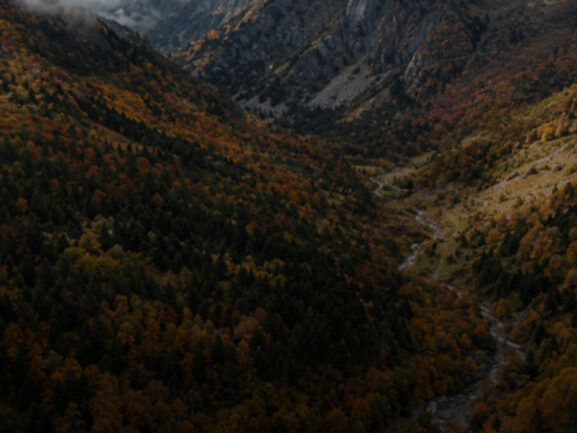
The ideal windows are May–June and September–October. Spring brings the Voidomatis at full flow, wildflowers on the gorge walls, and cooler temperatures on the trail. Autumn turns the forest copper and gold, the crowds thin out, and the light is excellent.
July and August are hot inside the gorge — temperatures can reach 35°C in the canyon with little shade or breeze. Doable, but an early start (before 7am) is non-negotiable in high summer.
Winter hiking is possible for experienced hikers with appropriate gear. The upper paths can be icy from November through March, and some sections are impassable after heavy snow.
What to Pack
- Sturdy hiking boots with ankle support — the descent involves loose scree and uneven stone steps
- At least 2 litres of water per person; you can refill at the Voidomatis springs
- Sun protection — the gorge rim is fully exposed before you drop in
- A light layer — the gorge floor stays cooler than the surrounding plateau
- Offline map downloaded in advance (GPS signal is good; mobile data is not)
- Emergency whistle and basic first aid kit if you’re going solo
Getting There
The nearest large town is Ioannina, about 45 km from Monodendri. From Ioannina, you can drive to Monodendri in around 50 minutes via the Zagori road. There is no regular bus service directly to Monodendri, so a rental car, a taxi from Ioannina, or joining a guided group is the practical option.
If you’re ending at Vikos or Papigo rather than returning to your start point, you’ll need a car shuttle or to arrange a pickup in advance.
Where to Stay
Monodendri, Megalo Papigo, and Mikro Papigo are the main bases. All three have traditional guesthouses — stone-built, family-run, the kind where breakfast is included and the host tells you where the locals actually swim. Book ahead for May, June, and the September–October window; these villages have limited beds and fill up fast on weekends.
Hike It With a Local Guide
If you want someone who knows the gorge — the detour paths, the best viewpoint that isn’t on the map, when the Voidomatis is swimmable — a local guide changes the experience. Foxie connects you with certified guides who lead small groups through Vikos Gorge, including the May 22–24 traverse that takes in the full length of the canyon at its best.