Wild Camping at Drakolimni: A Night on Mount Tymfi
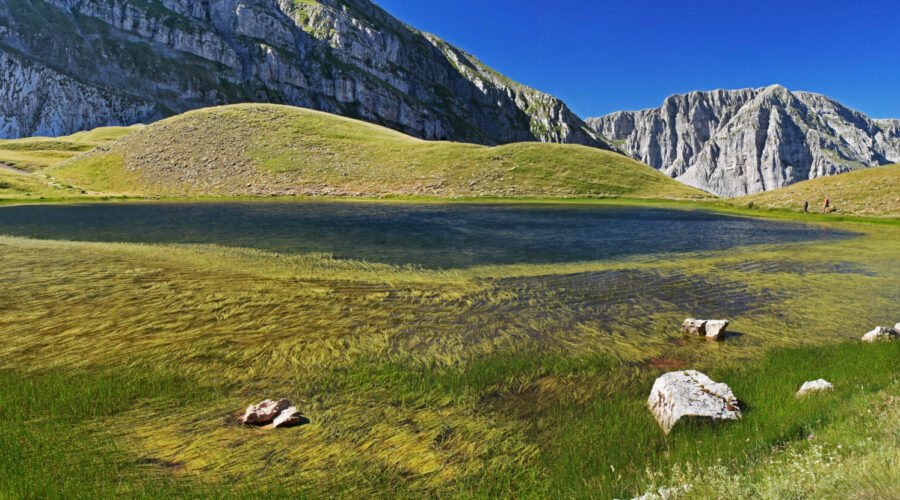
At 2,050 metres above sea level, on a rocky shelf of Mount Tymfi in the Zagori region of northern Greece, lies one of the most enchanting wild camping spots in all of Europe. Drakolimni — the Dragon Lake — is a small, perfectly still glacial tarn ringed by pale limestone crags and high alpine meadows. The water reflects the sky with mirror-like clarity. At dawn, the peaks glow pink and orange above the mist. And if you look carefully into the shallows, you will see them: the Alpine Newts, gliding silently through the cold water, the creatures that gave this place its mythical name.
A night at Drakolimni is one of those experiences that resets something in you. No electricity, no signal, no noise beyond the wind and the occasional clank of a sheep bell far below. Just the mountain, the lake, and the sky full of stars.
What is Drakolimni?
Drakolimni translates literally as Dragon Lake, and there are two of them in the Greek Pindus mountains — one on Mount Smolikas to the north-east, and this one, on Mount Tymfi (also known as Gamila), which rises to 2,497m and forms the northern wall of the Vikos Gorge. The Tymfi Drakolimni is generally considered the more accessible and more visited of the two, though accessible is a relative term: it still requires a serious half-day walk from the nearest trailhead.
The lake sits in a cirque — a bowl-shaped hollow carved by glacial action during the last ice age — at the base of the Gamila plateau. In winter it freezes solid. In summer it teems with the Alpine Newt (Ichthyosaura alpestris), a species found at high altitude across central and southern Europe, but particularly visible and numerous here. The newts are protected, and the area around the lake is a core zone of the Northern Pindus National Park.
The Trail: Papingo to Drakolimni
The standard approach for Drakolimni hiking begins from the village of Mikro Papingo, a stunning stone-built settlement perched above the Vikos Gorge. The trail leaves the village and climbs steeply through beech and oak forest for the first hour, before emerging onto the open high plateau of Astráka at around 1,800m. A stone refuge hut — the Astráka Refuge — sits at the plateau edge, staffed in summer and a welcome waypoint for water and a rest.
From the refuge, the trail continues east across the limestone plateau — a strange, alien landscape of white rock, dwarf shrubs and scattered wildflowers — before descending slightly into the cirque where Drakolimni lies. The walk from Papingo to the lake takes approximately 3.5 to 4 hours at a steady pace, covering around 9 kilometres and ascending roughly 1,000 metres. The descent is 2.5 to 3 hours.
For those who want to include the summit of Gamila (2,497m), it is a further 1.5 hours from the lake to the top, with magnificent views north to Smolikas and south into the depths of the Vikos Gorge. A full Drakolimni hiking circuit combining the lake and summit is one of the great day walks in Greece.
Wild Camping at the Lake
Wild camping at Drakolimni is a transformative experience. The flat meadow to the south of the lake offers sheltered pitches with soft grass, and the reflection of the stars in the water on a clear night is something genuinely difficult to describe. Temperatures drop sharply after sunset even in midsummer — expect 5°C to 8°C at night — so a three-season sleeping bag and a good tent are essential.
Water from the lake is drinkable with treatment (a filter or purification tablets), but carrying your own from Mikro Papingo or the Astráka Refuge is safer. Campfires are prohibited within the national park — a small camping stove is the right tool for cooking your mountain meal as the sky turns purple and the newts come alive in the shallows at your feet.
Leave no trace. The Tymfi wilderness is one of the last truly wild places in Greece, and it deserves to stay that way.
Wildlife and the Alpine Newt
The Alpine Newt is the star of Drakolimni, but it is far from the only wildlife you are likely to encounter. Chamois — the agile mountain antelope of southern Europe — are regularly spotted on the crags above the lake, picking their way across seemingly impossible terrain. Golden eagles hunt the plateau, and in the beech forest below, you may hear the drumming of woodpeckers or catch a glimpse of a roe deer. Brown bears and wolves inhabit the wider Pindus landscape, though sightings near the lake are rare.
The flora of the Tymfi plateau is equally remarkable: the limestone soil supports dozens of endemic plant species, including several orchids that bloom in June and early July. Botanists have recorded over 1,700 plant species in the Zagori region as a whole — an extraordinary concentration for such a small area.
When to Visit
The Drakolimni hiking season runs from mid-June through September. The lake is often still partially frozen in early June, and the access trail can hold snow patches until the end of May. July and August are the prime months: the plateau is in full flower, the newts are most active, and the weather is generally stable. That said, mountain weather in the Pindus can change rapidly — afternoon thunderstorms are common from June through August, so plan your ascent for morning.
For the wild camping experience specifically, mid-July to mid-August offers the best combination of dry conditions, mild overnight temperatures, and the longest hours of daylight to make the most of the mountain. September has a particular magic — cooler, quieter, and with the first tinge of autumn colour in the beech forest below.
Wild Camping at Drakolimni with Foxie
Foxie runs a guided wild camping and cooking experience on Mount Tymfi — spending a night at the edge of Drakolimni under the stars, with a local guide who knows the mountain, its stories, and how to cook a proper meal at altitude. Small groups only, full gear provided, and an experience that most people describe as one of the best nights of their lives.